• 网站首页
  • 关于我们

    关于我们

    ABOUT US

    ABOUT US

    快捷导航 / QUICK NAVIGATION
    关于我们栏目配图
  • 产品中心

    产品中心

    PRODUCT CENTER

    按盒型与用途查看产品

    核对尺寸、材料与工艺

    准备样品与询价资料

    产品中心栏目配图
  • 生产设备

    生产设备

    PRODUCTION EQUIPMENT

    查看设备与工序介绍

    具体工艺按项目确认

    打样与交付安排另行沟通

    生产设备栏目配图
  • 新闻资讯

    新闻资讯

    NEWS INFORMATION

    阅读包装采购与工艺指南

    查看打样和验收清单

    按需求准备询价资料

    新闻资讯栏目配图
  • 联系我们
  • 定制与下单问答
  • EN
  • 博雅彩印公众号二维码

    公众号

  • 全国服务热线

    18824998869

    • 联系人:莫先生

    • 电 话:18824998869

    • 邮 箱:denny@byprintings.com

    • 地 址:中山市小榄镇北区茂丰一路1号之一

    新闻资讯

    NEWS INFORMATION

    Packaging Samples: Dummy vs Digital Proof vs Production Sample

    发布时间:2026-08-19 浏览:309次
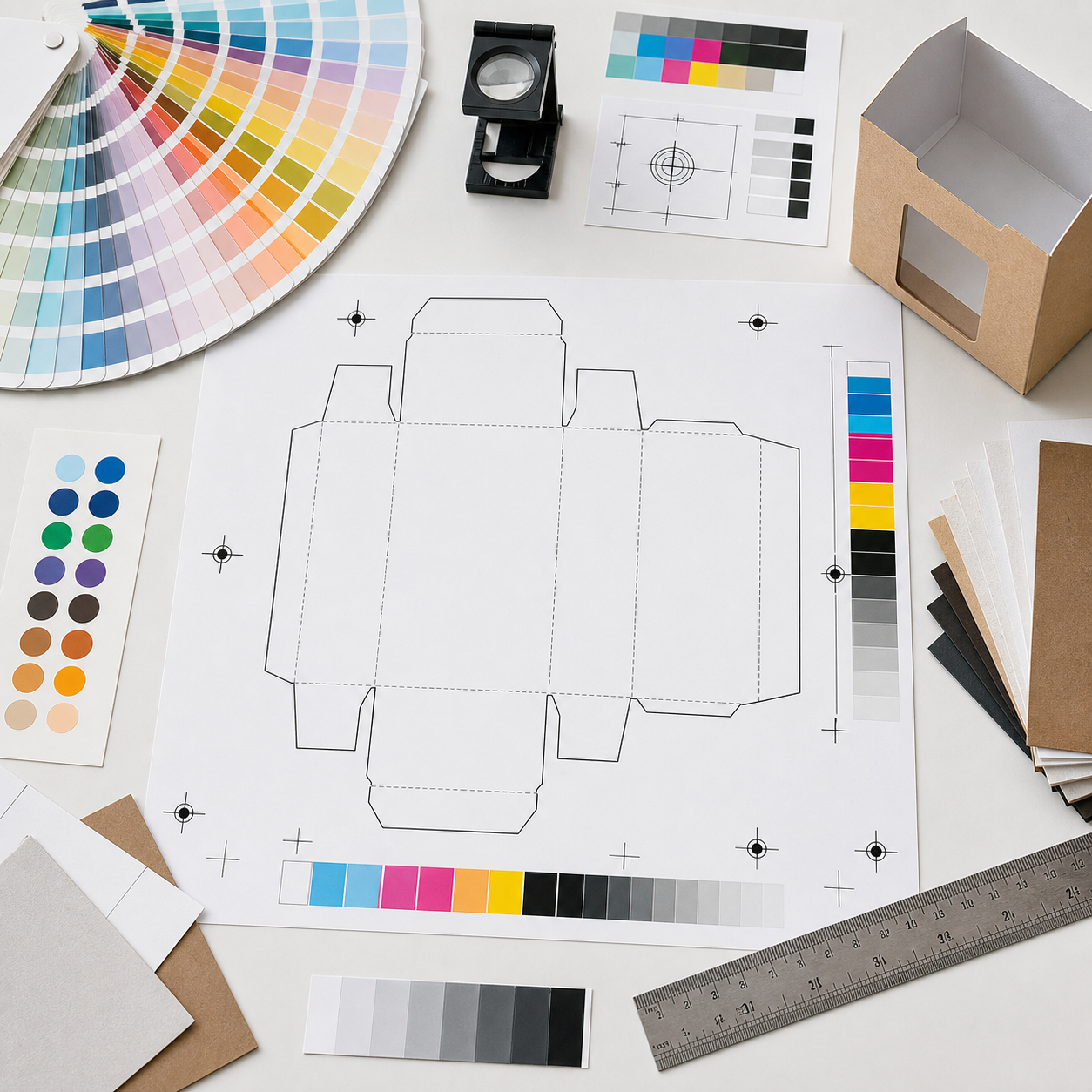
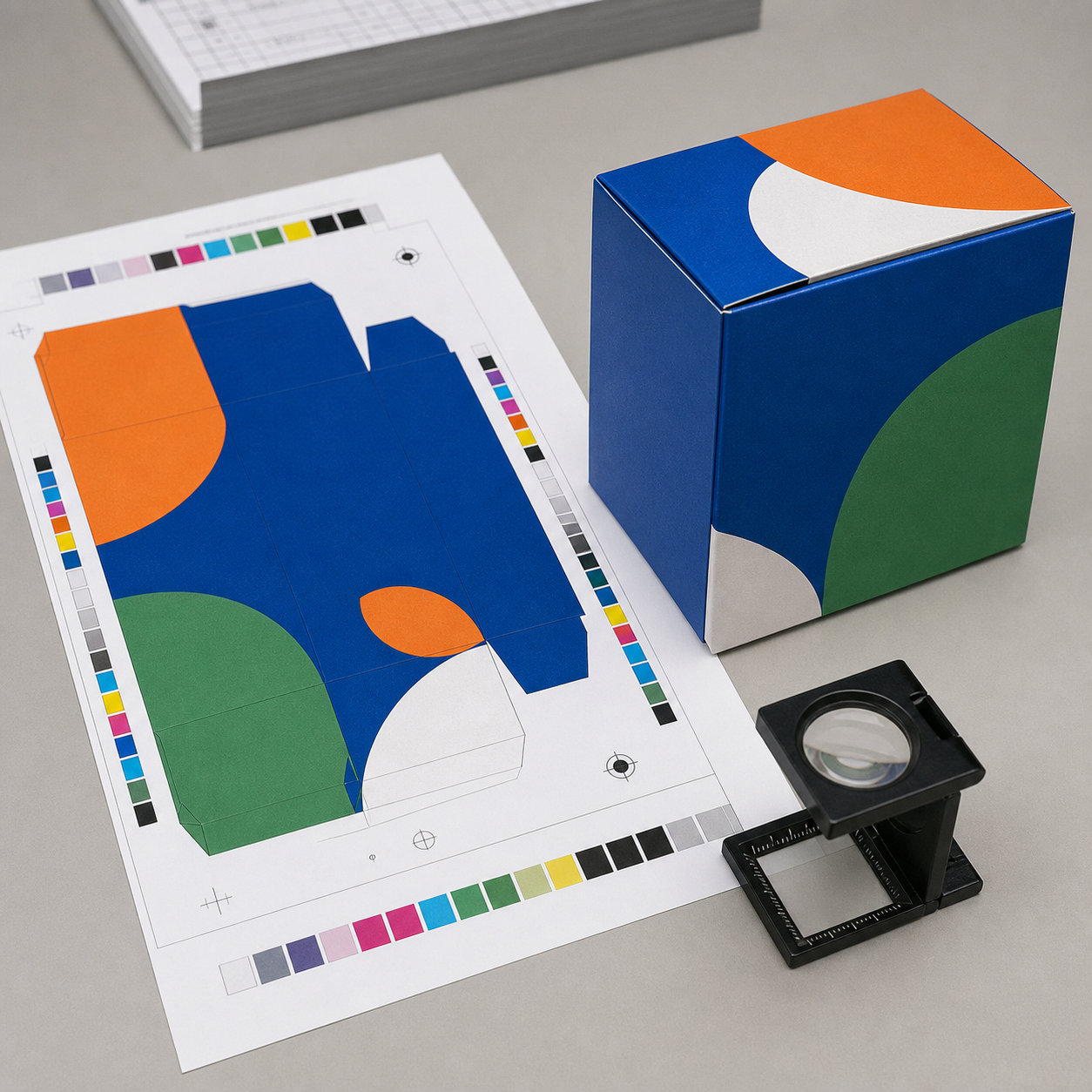
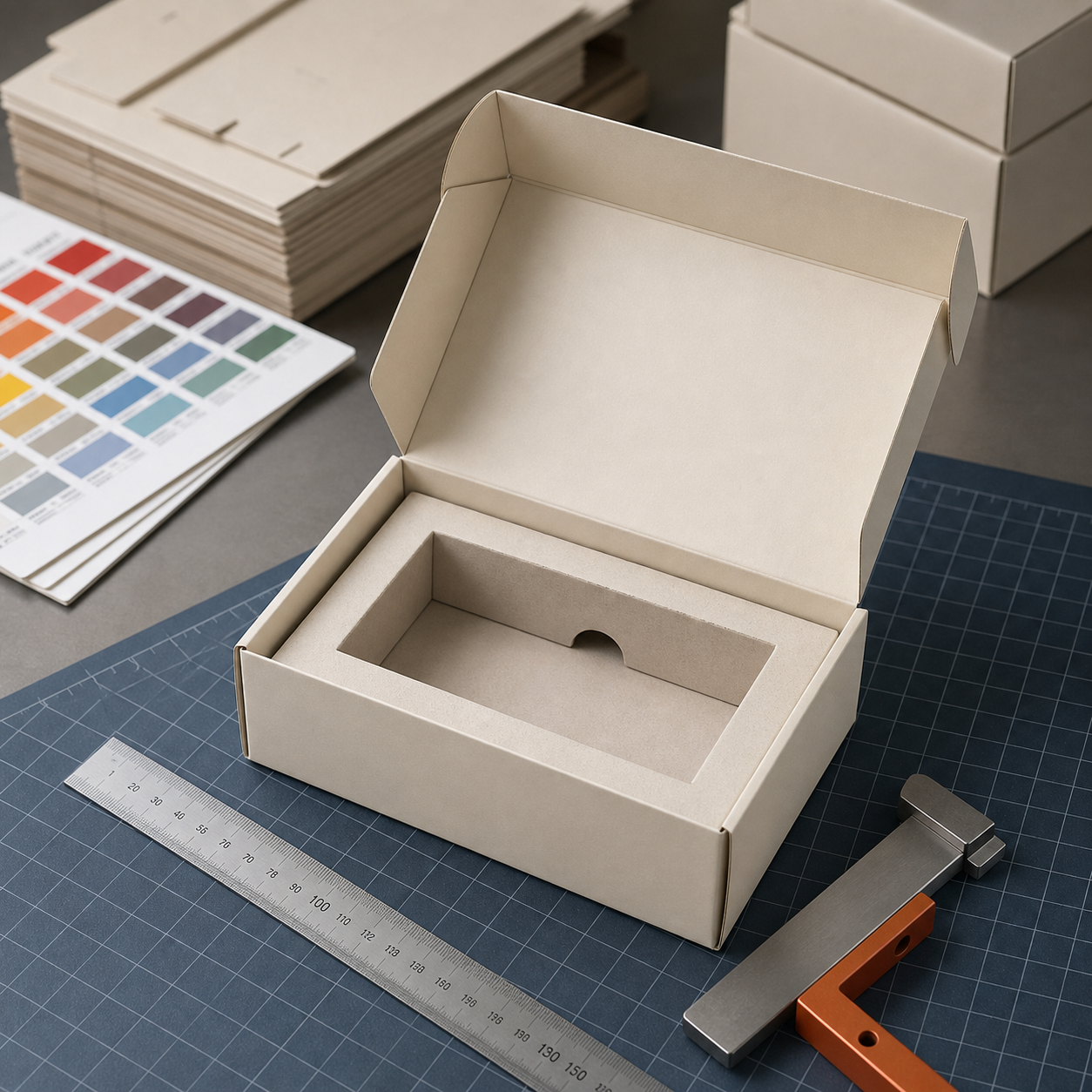
    Three packaging sample stages shown left to right: blank dummy structural mockup, digitally printed proof, and finished production sample
    The three stages answer different questions: does the box work, does the artwork look right, and will the finished production match the approved standard?

    Updated: August 19, 2026. This guide is for packaging buyers, brand teams, designers, and importers planning custom cartons, rigid boxes, corrugated mailers, or presentation packaging. Prices and lead times below are working ranges, not a formal quotation; the final amount depends on size, materials, finishes, tooling, quantity, and shipping.

    Stop saying “we need a sample”

    When a buyer says “please send a sample,” a supplier still needs to know which risk the buyer wants to check. A blank white box, a digitally printed proof, and a sample made on the production line can all be called a sample, but they do not answer the same question.

    A useful way to discuss sampling is to name the question first:

    • Does the product fit? Check the box structure and insert with a dummy sample.
    • Does the artwork sit in the right place? Check the digital proof.
    • Will the actual order match the approved print and finish? Check a production sample or another agreed physical reference.

    That wording makes the approval record clearer and prevents a common dispute: one side thinks “sample approved” means the structure is approved, while the other side thinks it also covers color, foil, embossing, glue, and mass-production consistency.

    1. What is a dummy sample?

    A dummy sample is a physical box made to check the structure. It normally uses the intended board or corrugated grade, approximate dimensions, folds, tabs, inserts, and opening method, but it has no final artwork. It may be plain white, kraft brown, or marked only with simple notes.

    What a dummy sample can confirm

    • Whether the product actually fits inside the box.
    • Whether the insert holds the product without excessive movement.
    • Whether lids, magnetic closures, locks, tabs, or tear strips work as intended.
    • Whether the box can be assembled, filled, closed, and opened in the real workflow.
    • Whether the package creates obvious pressure points or risks damaging the product.
    • Whether a warehouse or fulfilment team can handle the structure at a practical speed.

    What a dummy sample cannot confirm

    A dummy does not prove the final color, artwork position, foil coverage, embossing depth, spot UV, lamination feel, or final print sharpness. It also cannot prove that a production batch will use the same material lot or finishing settings.

    Do not reject a dummy because it is blank, and do not approve the final appearance because the dummy “looks clean.” Its job is to retire structural risk.

    Typical dummy cost and timing

    For a standard structure, a factory may provide the dummy at no charge or at a small sample fee, while the buyer pays courier cost. A working courier range of roughly US$30–60 is common for a small parcel, but the actual amount depends on destination, dimensions, and shipping service. A sample-table dummy often takes about 3–5 working days after the drawing and material are confirmed.

    2. What is a digital proof?

    A digital proof is a physical sample printed with the proposed artwork on a digital press or inkjet proofing device. It lets the team see the complete layout on a three-dimensional box instead of judging a flat PDF alone.

    What a digital proof is good for

    • Checking artwork orientation on each panel.
    • Checking text, warning information, barcode placement, and small type.
    • Checking the relationship between artwork and folds, cut lines, windows, and glue flaps.
    • Reviewing how the product looks in a team meeting, sales presentation, or trade-show setting.
    • Finding obvious layout problems before plates, dies, or finishing are committed.

    Why a digital proof is not a color contract

    Digital proofing and offset production can use different inks, substrates, profiles, and drying behavior. A digital proof can provide a useful color direction, but it should not automatically be treated as an exact prediction of the final offset sheet. A strict brand color needs an agreed reference, viewing condition, tolerance, and approval method.

    If your project depends on repeatable color, connect the proof conversation with your color-management requirements. The site’s GMI color-management certification guide explains why process control and a physical standard matter more than a screenshot on a different monitor.

    Typical digital-proof cost and timing

    A digital proof commonly falls in the range of US$50–150, depending on size, number of panels, substrate, and requested finish simulation. Some suppliers credit part of the fee against the first order; this should be written into the quotation rather than assumed. A working lead time is around 5–7 working days plus shipping.

    Digital equipment can imitate a matte or gloss look, but hot foil, embossing, complex die-cuts, and some special textures may be represented by a hand sample or a visual approximation. Ask the supplier to mark which parts are physically produced and which parts are simulated.

    3. What is a production sample?

    A production sample, also called a pre-production sample or press sample, is made with the production method and the tooling intended for the order. Depending on the project, that may include the actual printing plates, cutting die, board, lamination, foil, embossing, glue, and assembly settings.

    What a production sample can confirm

    • The real print result on the intended material.
    • Color direction under the agreed viewing conditions.
    • Foil, embossing, debossing, spot UV, lamination, and other finishing effects.
    • Die-cut accuracy, fold position, glue coverage, and assembly behavior.
    • Whether the completed package works with the actual product and fulfilment method.
    • A physical reference that can be kept with the production and inspection records.

    When a production sample is worth the extra cost

    A production sample is more useful when the order is large, the brand color is tightly controlled, the package will sit on a retail shelf, the finish is complex, or rejecting a batch would be expensive. It is also sensible when the buyer and supplier have not worked together before and the quality standard needs to be physical and unambiguous.

    For a simple one-color shipping carton with a forgiving appearance, a full production sample may be more than the project needs. A good supplier should explain that trade-off instead of selling the most expensive sample by default.

    What a production sample does not replace

    One production sample does not replace a complete quality plan. It does not by itself define acceptable variation across thousands of units, prove transport performance, or replace product-safety and regulatory checks. Record the sample’s material, artwork version, finishing method, date, and approval comments so that “approved” has a clear meaning.

    Dummy vs digital proof vs production sample

    Sample typeMain questionBest for checkingMain limitation
    Dummy / white sampleDoes the package work?Fit, structure, insert, opening, assemblyNo reliable evidence for final artwork or color
    Digital proofDoes the artwork look right on the box?Layout, text, barcode, folds, approximate colorMay not match offset color or real special finishes
    Production sampleIs this the physical standard for production?Print, material, finish, die-cut, glue, assemblyCosts more and still needs a wider quality and transport plan

    Which sample should you order?

    Choose a dummy first when the structure is new

    Choose a dummy if the product dimensions are unusual, the insert is complicated, the lid or lock is new, the box must survive repeated opening, or the package will be assembled by a third-party warehouse. Solving structure problems at this stage is usually cheaper than correcting printed cartons.

    Add a digital proof when the artwork is still moving

    Choose a digital proof when several people need to review the physical layout, when the package has many panels, or when small type and barcode placement are important. It is especially useful before you approve the final artwork file.

    Add a production sample when rejection risk is high

    Choose a production sample when the first order is large, the finish is premium, the color is part of the brand identity, or the cost of a wrong batch is much higher than the sample and tooling cost. If you only need to see the structure, do not pay for a production sample just to obtain a white box.

    Use a staged approval instead of one vague approval

    Write the approval stages separately: structural approval, artwork/layout approval, color and finish approval, and mass-production release. That simple separation makes it easier to see which risk is closed and which risk is still open.

    What to inspect at each stage

    Dummy-sample checklist

    1. Measure the product, insert, inner clearance, and closed-box dimensions.
    2. Check whether the product moves, rubs, or presses against a panel.
    3. Open and close the box repeatedly using the intended path.
    4. Check locks, magnets, tabs, tear strips, windows, and pull tabs.
    5. Assemble the box using the real packing sequence.
    6. Check whether the structure can be handled without crushing corners.
    7. Photograph the approved structure and mark any changes on the drawing.

    Digital-proof checklist

    1. Check every panel orientation after folding.
    2. Check the logo, product name, legal text, warnings, and language versions.
    3. Check barcode quiet zones and whether the code sits over a fold, seam, or dark area.
    4. Check bleed, safe area, windows, cut lines, glue flaps, and opening instructions.
    5. Compare large color areas with the agreed digital or physical reference.
    6. Mark which foil, embossing, UV, or texture effects are simulated.
    7. Record the artwork file version and approval date.

    Production-sample checklist

    1. Record board or paper type, thickness, flute, batch, and surface treatment.
    2. Check color under the agreed light and viewing conditions.
    3. Check fine text, barcode readability, registration, and image sharpness.
    4. Check foil coverage, embossing depth, spot UV, lamination, and edge quality.
    5. Check die-cut dimensions, crease position, folding, gluing, and final squareness.
    6. Pack the real product and check the finished box again.
    7. Keep the signed or dated reference sample with the purchase order.
    8. Write how production pieces will be compared with the reference.

    How sample cost and timing are usually built

    Sampling cost is not only the price of the paper box. A quote may include artwork preparation, sample-table cutting, digital printing, plates, dies, foil tooling, embossing tooling, setup, assembly, courier, and a credit against the first production order. Ask for those items separately so that a low sample price does not hide a later tooling charge.

    As a practical starting range:

    • Dummy: often 3–5 working days after the structure and material are confirmed, plus shipping.
    • Digital proof: often 5–7 working days plus shipping.
    • Production sample: commonly longer because plates, dies, finishing, and production scheduling are involved.

    These are planning ranges, not promises. A small folding carton and a rigid box with foil and a complex insert should never be quoted as if they have the same sampling path.

    A practical example: why the sequence matters

    In one project described by the original article, a Texas buyer had a glass diffuser with an unusual shape. The team made a dummy first and needed two insert revisions before the product was held correctly. They then used a digital proof for the team’s artwork approval and a production sample because the brand color and first order were important.

    The sample stages exposed three problems before mass production: an insert that did not grip, a barcode too close to a fold, and a foil logo that needed a larger readable area. The lesson is not that every project needs all three stages. The lesson is that each stage should be used to answer its own question.

    Questions to ask a supplier before paying for a sample

    1. Is this a dummy, a digital proof, or a production sample?
    2. Which material and finishing steps are real, and which are simulated?
    3. What will this sample confirm, and what will it not confirm?
    4. Will the sample fee, plate fee, or die fee be credited against the production order?
    5. What is the expected lead time after the artwork and structure are approved?
    6. Which physical or digital color reference will be used for approval?
    7. How will the production team compare mass-production pieces with the approved sample?
    8. How many revisions are included before a new sample charge applies?

    If a supplier cannot answer these questions clearly, the problem is not necessarily the sample itself. The approval process has not been defined well enough yet.

    Related packaging documents

    Before sampling, prepare the artwork, dieline, text, barcode, and finishing notes. The packaging artwork and prepress checklist covers those file checks. For a Chinese-language handoff sheet, see the carton sampling materials and dieline checklist.

    If the box will be shipped through parcel networks, connect the sample review with the ECT, BCT, and corrugated stacking-strength guide. If the package includes a tear strip or first-open feature, the tear-strip design and production-testing guide is the next practical reference. For quotation discussions, use the custom-carton quotation cost breakdown.

    Packaging sample FAQ

    Is a white sample missing the printing?

    Usually no. A white or kraft dummy is normally intended to check structure, fit, inserts, opening, and assembly. It is not intended to prove color or final finish.

    Can a digital proof replace a production sample?

    Sometimes, for a simple and forgiving project. It should not automatically replace a production sample when strict color, premium finishes, a large first order, or expensive rejection risk is involved.

    Do I always need all three sample stages?

    No. A simple shipping carton may need only a dummy and a documented production check. A complex retail package may benefit from all three. The right sequence depends on the risk, not on a fixed rule.

    Can I approve a sample from photos or video?

    Photos and video are useful for checking progress, but they cannot fully replace a physical check for fit, hand feel, color under the agreed light, foil, embossing, and assembly. Ask for the physical sample when the decision affects the production release.

    Should sample fees be deducted from the order?

    Many suppliers credit some tooling or sampling costs, but the policy varies. Put the amount, timing, and conditions in the quotation. Do not assume a verbal promise will appear on the final invoice.

    What should the final approval record contain?

    Keep the sample identification, artwork version, material, finish, color reference, date, approver, comments, and any agreed tolerances. A sample without a version or approval note is difficult to use during production inspection.

    Conclusion

    The simplest sampling rule is also the most useful: a dummy answers whether the package works, a digital proof answers whether the artwork looks right, and a production sample answers whether the finished manufacturing standard is acceptable. Name the sample type, name the risk it closes, and write down what remains outside its scope.

    When requesting a quote from Boya, send the product dimensions, box style, material, artwork status, finishes, quantity, shipping route, and the sample question you need answered. That gives the packaging team enough information to recommend the smallest useful sampling path instead of charging for stages that do not reduce your actual risk.